Home Background
Home arrow News

News

17 Jan 2012
10:16

Big Insights: What next for community spaces?

Last week I attended an event organised by Big Lottery Fund to help them consider the future of their funding for community spaces. Various organisations and charities who work with and support local people on public and open space projects were there to listen to others and to share their own experiences.

The public space agenda of different government departments was presented by landscape consultant, Peter Neal. We then heard about the Barnfield Estate Wellness Garden – a community open space improvement project that has been very successful in Greenwich thanks to effective partnership working. Group discussions followed.

The key thoughts and questions arising from the day were:


  • Any support organisation or project partner working on a community open space needs to have a full appreciation and understanding of the area in which they’re working (its history, residents and level of affluence/deprivation)

  • The success of the Barnfield Estate scheme is thanks to the mutual trust and respect between the residents, the council and the other support organisations. We discussed the importance of this equal relationship and the role of independent facilitators in community space projects

  • There are a wealth of resources available to community groups working on open spaces, but how do groups find out about these? We agreed that people and especially facilitators give the greatest support, but with limited capacity and jobs under threat this isn’t always possible. We need to ensure that infrastructure is built to allow community groups to share knowledge and experiences. (I know through our Study Tours that one of the most valuable things for community groups is the chance to meet one another and learn from each other’s successes and challenges.)

  • We felt that there is potential for community open space projects to engage more with the private sector and this ought to be explored

  • One of the key challenges for community open space projects is securing long term funding for their management and maintenance. Groups need to be encouraged to think about this from the outset


The overriding sense was that we need to create better communication and links between groups, networks and support organisations working on community spaces. In the current climate, I think this need for collaboration is greater than ever.

Big Insights

Myatt's Fields Park

Make a Comment

4 Mar 2011
09:15

Spaces by Design, Dunblane September 2010

Claire Kemp sets up

Claire from BDR sets up

Arranged in collaboration with Development Trust Association Scotland Delivered by Bureau - Design + Research (BDR)

8 & 9th September 2010 Braeport Centre, Dunblane

Participating groups: Artlink, Edinburgh Royal Hospital

Dunblane Development Trust

Glenkens Community and Arts Trust

Walkerburn Community Development Trust

Spaces by Design is one of a series of two-day Design Training courses The Glass-House Community Led Design delivers to community groups.

DAY 1

When the Glass-House team arrived, we were pleasantly surprised to see all 4 groups there, rearing to get started. Several of the groups had travelled long distances to be there.
After registrations, handing out of packs and a cuppa, Maja from The Glass-House and Wendy from DTA Scotland introduced the course. Leo and Claire from BDR started the morning with a short presentation on public space and design, and asked each of the groups to set up their workspace. The groups each had a table with a large map of their area and a corner of the hall at the lovely Braeport Centre, managed by the Dunblane Development Trust. In fact, we benefitted hugely from being in Dunblane and having the Development Trust attending the course. They shared their story of developing Dunblane in Bloom, a group that works on a voluntary basis to improve the environment of their town. 


Walkerburn initial presentation

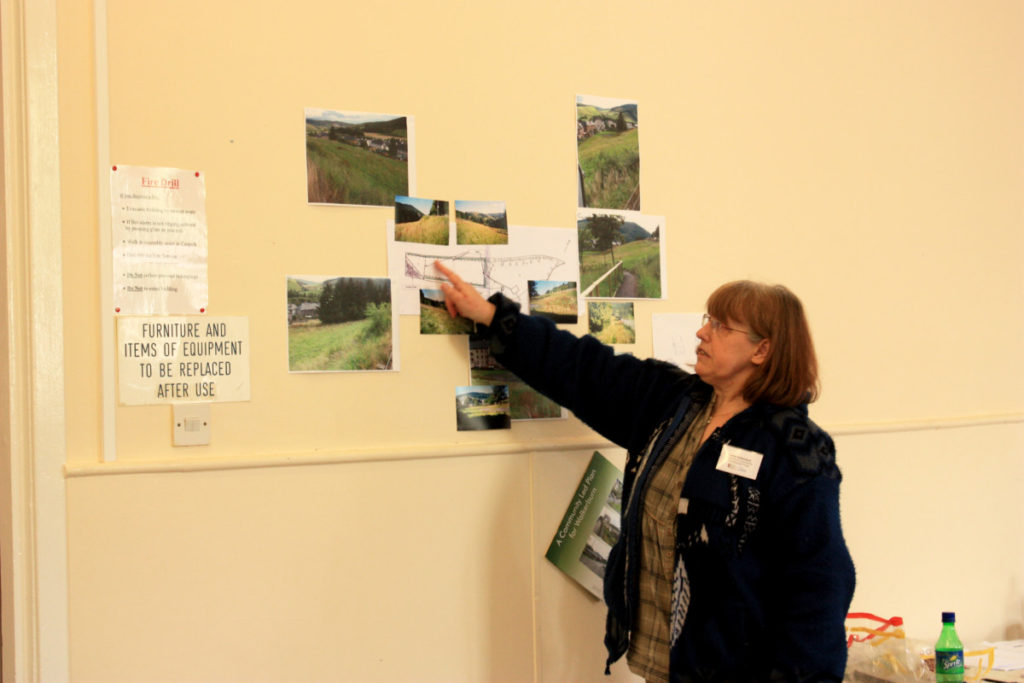
Cathy from Walkerburn DT presents their project to develop a sloping site adjacent to homes in Walkerburn.

When the groups had set up a little exhibition of material about their project, each group presented the work they had done prior to attending the course, using photos, maps and documents to tell the story of their group and project.

Leo and Claire presented and discussed good public spaces with the groups and showed examples of public spaces that work, explaining what it is that makes them successful - Streets, Parks, Green Spaces, Play Spaces, Squares/Piazzas. Time for lunch from the lovely Tilly Tearooms.

The afternoon was a study tour that took the group out and about to experience public places that have been regenerated, meet and learn from the people who were involved in the process and to get ideas for their own projects.

We started off with a short tour of some of the work the Dunblane in Bloom group have done - planting in hanging baskets, flower planting along roads and upgrades made to roundabouts in the town.


Dunblane in bloom

Despite the rain, the study tour got off to a good start with Dunblane in Bloom's street corner garden

Roundabout
A roundabout exploring themes of local nature

Then off to Causewayhead Park in Stirling to have a look at the recently developed play space, incorporating various new pieces of equipment (water feature, paddling pool) as well as replacing the flying fox and sand play structure and retaining existing play frames. 

Causeway park - group shot

Leo talks with the groups about the creative landscaping, and the variety of types of spaces for all ages clearly defined by planting

Causeway Park
The play space is popular, even on a grey weekday afternoon

Raploch Urban Regeneration Company has over the last years been regenerating some open spaces in the Raploch area, and we in particular went to see the Riverwalk and their various activity spaces along the walk.


DAY 2

With all the input from our first day, the groups were ready to get stuck in. Here are some pictures from the workshops of Day 2:

Dunblane Mapping

The Dunblane group map out the past and present of their space

Glenkins Model 1

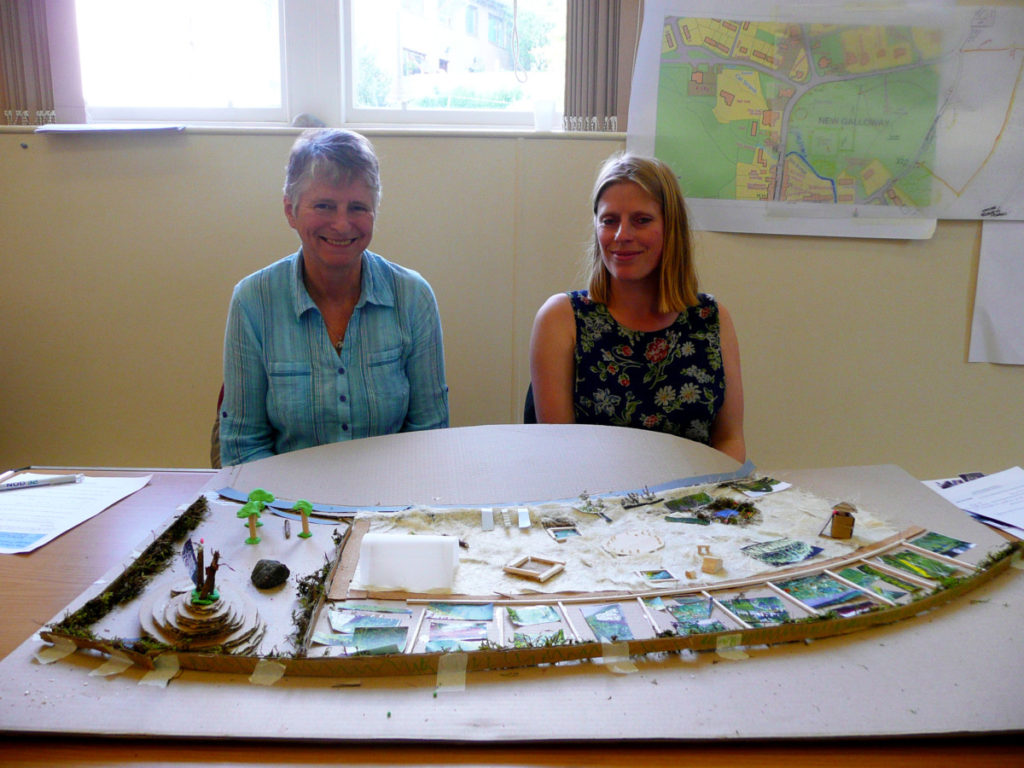
The Glenkins group creating a 3D model of their space

Artlink Final Presentation
The groups present their models

Walkerburn Final Presentation

Walkerburn's final model

Glenkins Final Model

Artlink Final Model
Artlink Final Model

   "[The course was] very enjoyable – great balance of interactive/action visits & information."


If you would like more information about this or other Design Training courses run by The Glass-House then please contact Maja Jorgensen at The Glass-House on 020 7490 4583 or via maja@theglasshouse.org.uk.


Make a Comment